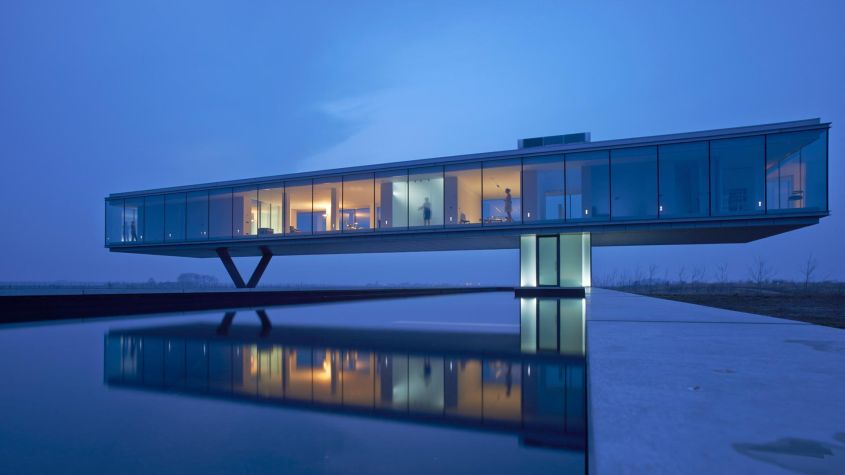
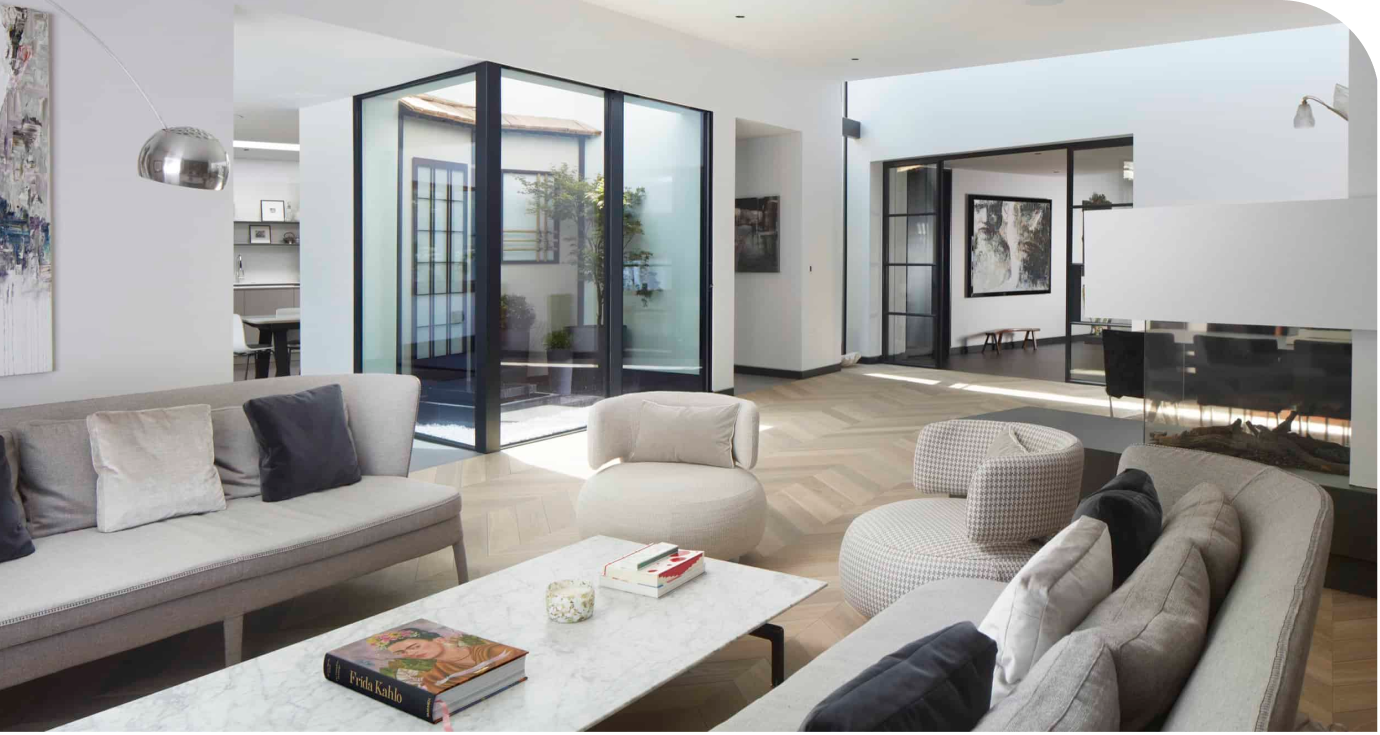
Mastering The Mirror Effect and Architectural Transparency

In the realm of high-end interior design, the most valuable luxury isn’t gold or marble—it is space and light. As urban living environments become increasingly compact, designers have had to look beyond physical square footage and turn toward the psychology of perception. This is where the dual concepts of the “Mirror Effect” and “Architectural Transparency” come into play. These are not merely decorative choices; they are sophisticated architectural tools used to manipulate reality, dissolve boundaries, and create a sense of infinite openness within a confined shell.


The Mirror Effect: Doubling the Dimension

The mirror is perhaps the oldest “magic trick” in the designer’s handbook. However, using mirrors effectively requires an understanding of physics and visual weight. When placed strategically, a mirror does more than just show a reflection; it tricks the human brain into believing there is a continuation of the room.

To maximize the Mirror Effect, one must … Read more

Mastering Architecture and Space Perception in Interior Design

When we walk into a room, our brains perform thousands of instantaneous calculations. We subconsciously measure the height of the ceiling, the distance between walls, and the way the light hits a corner. This psychological experience is known as space perception. In the world of professional interior design, the goal is often to manipulate these perceptions—making a cramped room feel expansive, a cold hall feel intimate, or a low ceiling feel like it reaches the sky. Enhancing architecture is not always about moving physical walls; it is about using visual cues to redefine the boundaries of a space.


The Psychology of Verticality: Lifting the Ceiling

One of the most common architectural challenges is the “closed-in” feeling caused by low ceilings. To counteract this, designers use verticality to draw the eye upward, creating a psychological sense of height. This is achieved through the principle of continuity.

When you install floor-to-ceiling … Read more

Lighting: The Unsung Hero of Interior Design

When we step into a room that feels “just right,” we often credit the plush velvet sofa, the expensive hardwood floors, or the curated gallery wall. However, there is a silent director behind the scenes controlling how we perceive every one of those elements: lighting. In the world of interior design, lighting is frequently the last thing considered and the first thing budgeted out, yet it is the single most important factor in determining the mood, functionality, and aesthetic success of a space. It is truly the unsung hero that can transform a cold, cavernous room into a cozy sanctuary or a dull office into a high-energy creative hub.


The Three Pillars of Layered Lighting

Professional designers never rely on a single light source. Instead, they use a technique called “layering” to create depth and versatility. To understand how to light a home effectively, one must master the three … Read more

A Comprehensive Guide to Modern Interior Home Design

Interior design is far more than just choosing a color for your walls or picking out a trendy sofa. It is a sophisticated blend of psychology, architecture, and personal expression. At its core, great interior design transforms a house into a home, creating a sanctuary that mirrors the occupant’s personality while maximizing the functionality of every square foot. Whether you are moving into a new space or looking to refresh your current environment, understanding the fundamental principles of design can help you create a space that feels both cohesive and inviting.


Understanding the Foundation: Balance and Proportion

The hallmark of a professionally designed room is balance. In interior design, balance creates a sense of equilibrium. It is about equalizing the visual weight of objects within a space. There are three primary types of balance: symmetrical, asymmetrical, and radial.

Symmetrical balance is often found in traditional interiors. It involves placing … Read more

Expert Architectural Strategies for Expanding Space

In the realm of modern architecture, the challenge of limited square footage is becoming increasingly prevalent. As urban populations swell and the cost of land rises, architects are being called upon to perform a kind of spatial alchemy: the art of making a physically small area feel significantly larger, more open, and more luxurious.

True space expansion is not about moving walls; it is about manipulating human perception. The brain interprets space based on light, sightlines, and the continuity of materials. By understanding these psychological and physical triggers, we can employ specific architectural strategies to transform a cramped environment into an expansive sanctuary. Here is an in-depth exploration of the most effective strategies for expanding space.


1. The Power of Uninterrupted Sightlines

One of the most fundamental principles in expanding perceived space is the management of sightlines. When a person enters a room, their subconscious immediately calculates the distance … Read more